Impact testers are mechanical devices used to measure the resistance of materials to impact, which is the force of an object striking a surface or a material experiencing a sudden change in motion. Impact testing is a common method used to evaluate the toughness and ductility of materials, as well as their ability to absorb energy. It is often used to test the strength and integrity of materials used in construction, manufacturing, and other industries, such as metals, plastics, and composites.
There are several different types of impact testers, including Charpy impact testers, Izod impact testers, and drop-weight impact testers. These testers use different methods to apply an impact force to a material and measure its response, such as by swinging a pendulum or dropping a weight onto the material. The results of an impact test can be used to determine the material’s suitability for a particular application, as well as to identify any weaknesses or defects in the material
What are the 3 impact testing techniques?
There are several impact testing techniques that are commonly used to evaluate the toughness and ductility of materials. Here are three of the most common impact testing techniques:
Charpy impact testing: This technique involves swinging a pendulum or hammer onto a notched sample of the material being tested. The amount of energy absorbed by the material during the impact is measured and used to determine the material’s toughness and ductility.
Izod impact testing: This technique involves using a pendulum to strike a sample of the material being tested. The energy absorbed by the material during the impact is measured and used to determine the material’s toughness and ductility.
Drop-weight impact testing: This technique involves dropping a weight onto a sample of the material being tested. The energy absorbed by the material during the impact is measured and used to determine the material’s toughness and ductility.
Each of these techniques has its own advantages and limitations, and the appropriate technique will depend on the specific properties of the material being tested and the intended application.
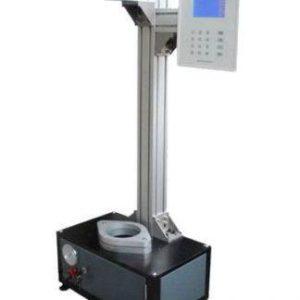
Application of Impact Testers
Impact testers are commonly used to evaluate the toughness and ductility of materials in a variety of applications, including construction, manufacturing, and other industries. Some examples of the ways in which impact testers are used include:
Quality control: Impact testers are used to ensure that materials meet the required standards for toughness and ductility. For example, steel beams used in construction must be able to withstand impact forces in order to ensure the safety and integrity of the structure.
Research and development: Impact testers are used to evaluate the properties of new materials and to identify potential weaknesses or defects. This information can be used to improve the performance and reliability of materials used in various applications.
Failure analysis: Impact testers can be used to identify the cause of failure in materials that have experienced an impact event. This information can be used to improve the design and manufacture of materials to prevent similar failures in the future.
Product testing: Impact testers are used to evaluate the performance of products that are subjected to impact forces, such as automotive parts, sporting goods, and protective equipment.
Overall, impact testers are an important tool for evaluating the strength and integrity of materials and ensuring their suitability for a wide range of applications.
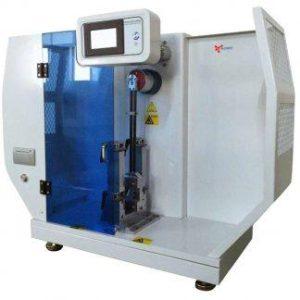
What impact testers actually measure
An impact tester measures the energy absorbed by a specimen during a rapid fracture event. That absorbed energy is a practical indicator of toughness, meaning the material’s resistance to crack initiation and crack growth under sudden loading. In pendulum methods, the machine compares the pendulum’s energy before impact and after it breaks (or partially breaks) the specimen. In drop weight methods, the machine applies a controlled impact mass and height, then assesses failure, penetration, or the energy required to reach a defined outcome.
What a good test report should include
A strong impact test report is detailed enough that another lab could replicate it. At minimum, include:
-
Method used (Charpy, Izod, drop weight, falling dart) and whether it is notched or unnotched
-
Specimen dimensions, notch geometry details, and number of replicates
-
Conditioning temperature, conditioning time, and test temperature
-
Machine model, striker geometry, support span or clamp details, and impact velocity (when applicable)
-
Results as individual values plus average and standard deviation
-
Observed failure modes and any anomalies during testing
-
Date, operator, and calibration status of the machine