Abrasion testers are machines used to measure the resistance of a material to abrasion, which is the process of wearing away a surface through rubbing or friction. Abrasion testers are commonly used in a variety of industries, including textiles, automotive, and construction, to evaluate the durability and performance of materials.
There are several types of abrasion testers available, including rotary drum testers, Taber abraders, and flex abrasion testers. Each type of abrasion tester operates using a different method to apply a defined amount of force and friction to a sample of the material being tested. The amount of wear or damage that the material experiences is then measured and used to determine its resistance to abrasion.
Abrasion testers are important tools for evaluating the performance of materials in applications where they will be subjected to wear and tear, as this can impact their lifespan and overall effectiveness.
How do you measure abrasion?
There are several ways to measure abrasion, depending on the type of abrasion tester being used and the specific material being tested. Some common methods for measuring abrasion include:
Weight loss: One method of measuring abrasion is to weigh the sample before and after the test to determine the amount of material that has been worn away. This is often done using a rotary drum tester, where the sample is placed in a drum that rotates against a abrasive surface. The difference in weight between the initial and final samples is used to determine the amount of abrasion that has occurred.
Surface roughness: Another way to measure abrasion is to evaluate the roughness of the material’s surface after it has been subjected to wear. This can be done using a profilometer, which is a device that measures the roughness of a surface by analyzing the heights of its peaks and valleys. The greater the roughness of the surface, the more abrasion it has experienced.
Visual inspection: In some cases, abrasion may be measured by simply examining the sample visually and determining the extent of wear or damage that has occurred. This method is often used in conjunction with other measurement techniques, such as weight loss or surface roughness, to provide a more comprehensive understanding of the material’s abrasion resistance.
Overall, the method used to measure abrasion will depend on the specific requirements of the test and the characteristics of the material being evaluated
What is the abrasion technique?
Abrasion technique refers to the method used to subject a material to abrasion, or the process of wearing away a surface through rubbing or friction. There are several techniques that can be used to abrade a material, including:
Rotary drum testing: In this technique, a sample of the material is placed in a drum that rotates against an abrasive surface. The drum may be rotated manually or using a motor, and the amount of abrasion that the material experiences is determined by weighing the sample before and after the test.
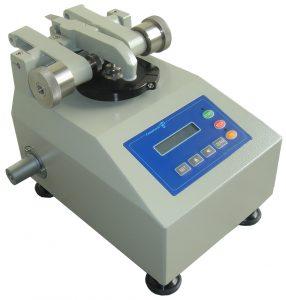
Taber abrasion testing: In this technique, a sample of the material is mounted on a rotating platform and subjected to abrasion by a rotating abrasive wheel. The amount of abrasion is typically measured by weighing the sample before and after the test or by evaluating the surface roughness using a profilometer.
Flex abrasion testing: In this technique, a sample of the material is subjected to abrasion by flexing it back and forth against an abrasive surface. The amount of abrasion is typically measured by weighing the sample before and after the test or by evaluating the surface roughness using a profilometer.
Overall, the choice of abrasion technique will depend on the specific characteristics of the material being tested and the requirements of the test.
Application of Abrasion Tester
Abrasion testers are used to evaluate the resistance of materials to wear and tear, which is an important characteristic in a variety of industries. Some common applications of abrasion testers include:
Textile industry: Abrasion testers are used to test the durability of fabrics and other textiles, such as clothing, upholstery, and carpeting.
Automotive industry: Abrasion testers are used to evaluate the wear resistance of automotive parts, such as tires, belts, and hoses, to ensure that they can withstand the rigors of use.
Construction industry: Abrasion testers are used to test the durability of construction materials, such as concrete, asphalt, and paint, to ensure that they can withstand the stresses of use in a construction setting.
Medical industry: Abrasion testers are used to evaluate the wear resistance of medical devices, such as stents, joint replacements, and prosthetics, to ensure that they can withstand the rigors of use in the body.
Overall, abrasion testers are important tools for evaluating the performance and durability of materials in a wide range of applications.
How does Abrasion Tester work?
Abrasion testers are machines that are used to measure the resistance of a material to abrasion, or the process of wearing away a surface through rubbing or friction. There are several types of abrasion testers available, including rotary drum testers, Taber abraders, and flex abrasion testers, each of which operates using a different method to apply a defined amount of force and friction to a sample of the material being tested.
Rotary drum testers work by placing a sample of the material in a drum that rotates against an abrasive surface. The drum may be rotated manually or using a motor, and the amount of abrasion that the material experiences is determined by weighing the sample before and after the test.
Taber abraders work by mounting a sample of the material on a rotating platform and subjecting it to abrasion by a rotating abrasive wheel. The amount of abrasion is typically measured by weighing the sample before and after the test or by evaluating the surface roughness using a profilometer.
Flex abrasion testers work by flexing a sample of the material back and forth against an abrasive surface. The amount of abrasion is typically measured by weighing the sample before and after the test or by evaluating the surface roughness using a profilometer.
Overall, the specific method used to apply abrasion to a material will depend on the type of abrasion tester being used and the characteristics of the material being tested.
Key Factors That Influence Abrasion Test Results
Abrasion testing is highly sensitive to test conditions. Even when using the same abrasion tester model, variations in setup and parameters can significantly affect the measured wear rate. Understanding these factors is essential for obtaining meaningful, repeatable results.
One critical factor is applied load. Higher loads increase contact pressure between the abrasive medium and the sample surface, accelerating material removal. Lower loads may better represent real-life service conditions but can require longer test durations to produce measurable wear.
Abrasive type and condition also play a major role. Abrasive wheels, sandpaper, steel balls, or rubber wheels each interact differently with the test surface. Additionally, abrasives wear over time. A partially worn abrasive can produce inconsistent results unless replaced or reconditioned according to a defined procedure.
Test speed and motion pattern influence the energy transferred to the surface. Linear abrasion, rotational abrasion, and oscillating motion each simulate different real-world wear mechanisms. Higher speeds generally increase wear but may introduce heat-related effects that do not occur in normal use.
Environmental conditions such as temperature and humidity can affect polymers, coatings, textiles, and composite materials. For sensitive materials, controlled environmental testing ensures that abrasion results reflect mechanical wear rather than moisture absorption or thermal softening.
Interpreting Abrasion Test Data Correctly
Abrasion testers do not measure a single universal property. Instead, they quantify relative resistance to wear under specific conditions. For this reason, results should always be compared only between samples tested using identical methods and parameters.
Common output metrics include weight loss, thickness reduction, surface roughness change, or visual damage rating. Each metric provides different insight. Weight loss is useful for dense materials, while surface appearance may be more relevant for decorative coatings or textiles.
It is important to recognize that abrasion resistance does not always correlate with hardness. A harder material may crack or flake under abrasion, while a slightly softer, more elastic surface may perform better by absorbing mechanical stress.
When defining pass or fail criteria, manufacturers should base thresholds on functional requirements rather than arbitrary numerical values. Abrasion testing is most powerful when used as a comparative quality control tool, not as an absolute predictor of service life.