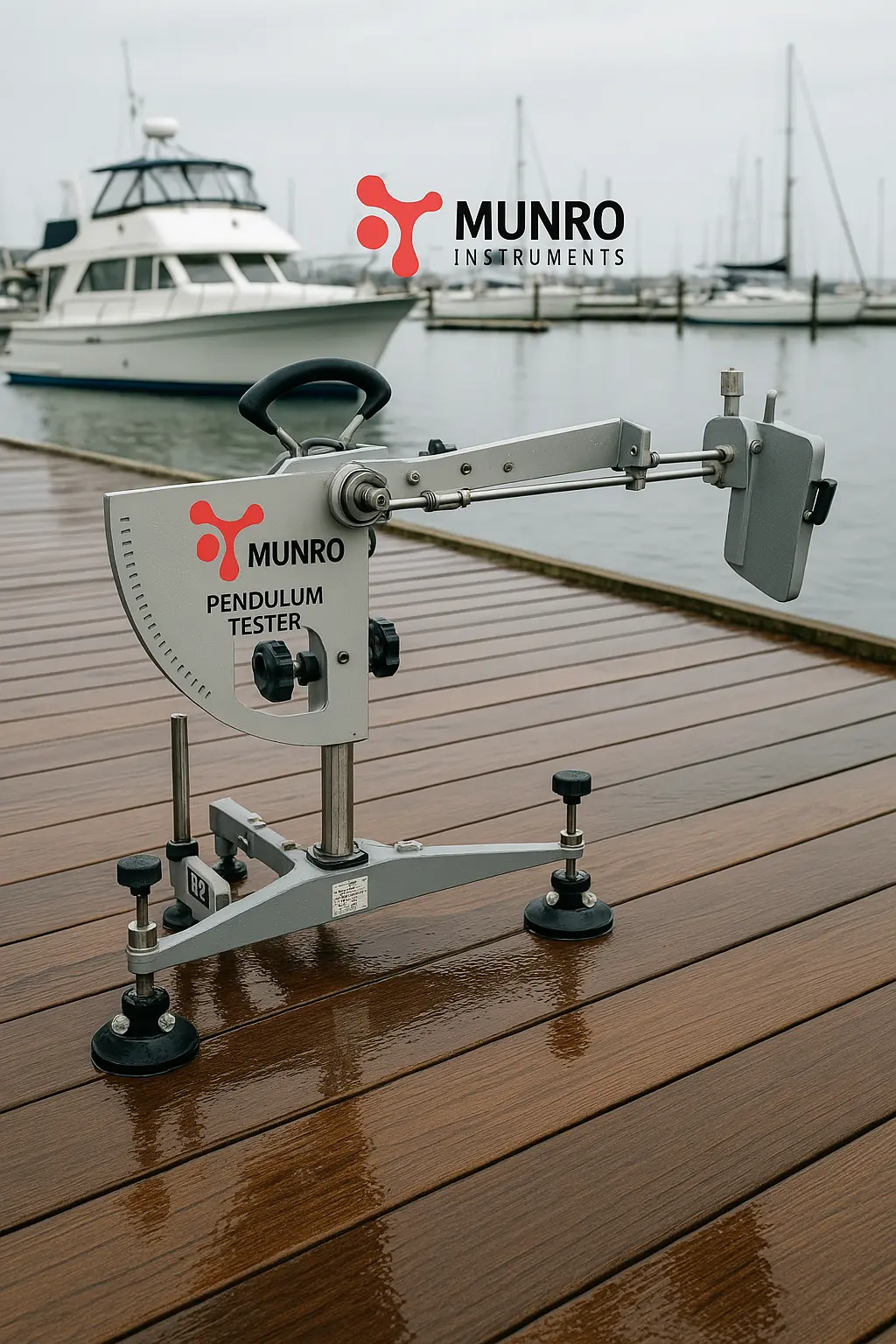
A skid resistance tester measures how slippery a surface is. In simple words, it measures friction. Higher friction means better grip. Lower friction means higher risk.
Engineers use this data to make safety decisions. For example, they decide when to resurface a road or replace a floor. Without accurate testing, those decisions become guesswork.
Why Skid Resistance Testing Matters
First of all, low skid resistance increases accidents. Cars need more distance to stop. Pedestrians slip more often. As a result, injuries and legal claims rise.
In addition, regulations across Europe require documented testing. Authorities expect measured values, not assumptions. Therefore, reliable testing protects both people and organizations.
Where Skid Resistance Is Tested
Roads and Highways
Traffic wears road surfaces over time. Rain makes the problem worse. For this reason, road agencies test skid resistance on a regular schedule.
Airports and Runways
Aircraft depend on runway grip during landing and braking. Even small losses in friction matter. Because of this, runway testing follows strict standards.
Industrial and Commercial Floors
Factories and warehouses often deal with water, oil, or chemicals. These conditions increase slip risk. Skid resistance testing helps prevent workplace accidents.
Pedestrian Areas
Public walkways, ramps, and stations must remain safe in all weather. Therefore, designers and inspectors rely on skid resistance values.
How a Skid Resistance Tester Works
The British Pendulum Principle
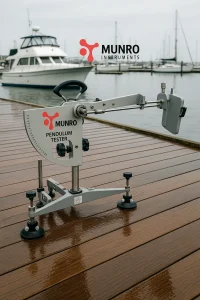
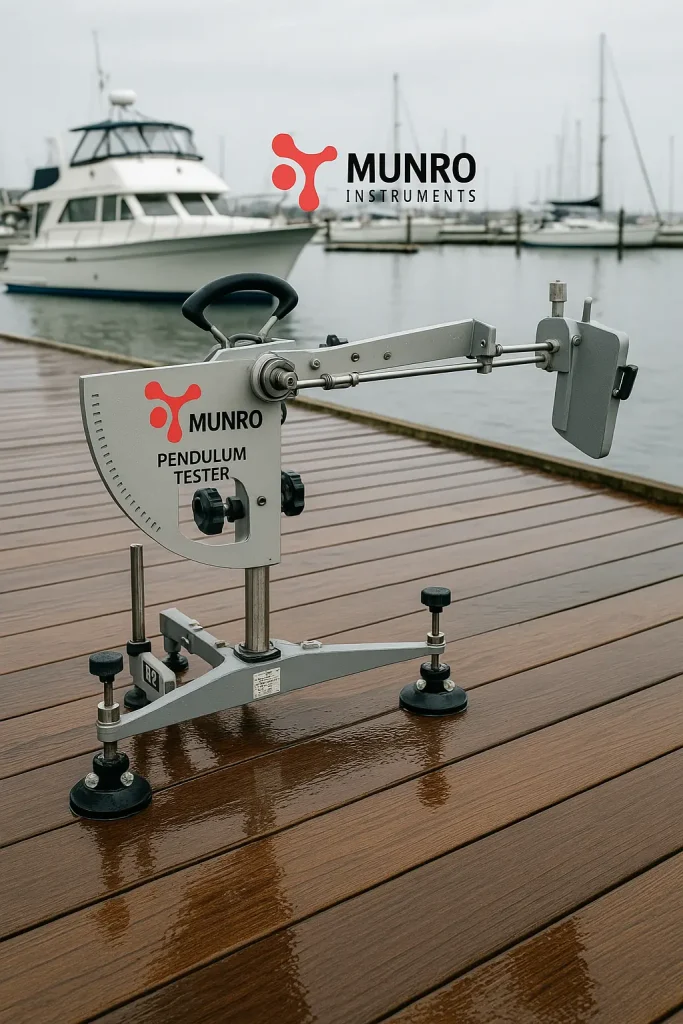
Most European testing uses the British Pendulum method. A rubber slider swings across the surface. Friction slows the swing. The device then converts this energy loss into a value.
This method works well because it is simple, repeatable, and standardized.
Understanding SRV Values
The result is a Skid Resistance Value, or SRV. A higher number means more grip. Standards define minimum SRV levels for different uses.
European Standards and Compliance
Across Europe, many authorities reference EN standards and UK specifications. These standards accept British Pendulum testing as a valid method.
Because of this, buyers should choose equipment that fully complies. Otherwise, test results may not be accepted.
Types of Skid Resistance Testers
Portable Testers
Most professionals choose portable testers. They allow on-site testing and fast decisions. In addition, they suit roads, floors, and runways.
Laboratory Devices
Laboratory systems offer controlled conditions. However, they cannot replace real surface testing. Therefore, field testers remain essential.
Key Features to Look For
Accuracy and Repeatability
A tester must give the same result under the same conditions. Consistency builds trust in the data.
Strong Construction
Outdoor testing exposes equipment to weather and dirt. Durable materials extend service life.
Calibration Support
Regular calibration keeps results valid. Suppliers must offer certified calibration services.
Why Buy a Skid Resistance Tester in Europe
Buying within Europe offers clear benefits. Delivery is faster. Support is easier to access. Standards compliance becomes simpler.
Most importantly, European suppliers understand local regulations.
Why Munro Is a Trusted Choice
Munro designs and manufactures skid resistance testers for professional use. Their instruments focus on accuracy, durability, and compliance.
In addition, Munro supports long-term use through spare parts and calibration services. This support makes a real difference over time.
Applications Across Industries
Munro skid resistance testers serve many sectors:
- Road authorities
- Airports
- Construction companies
- Safety consultants
- Facility managers
One device covers many needs.