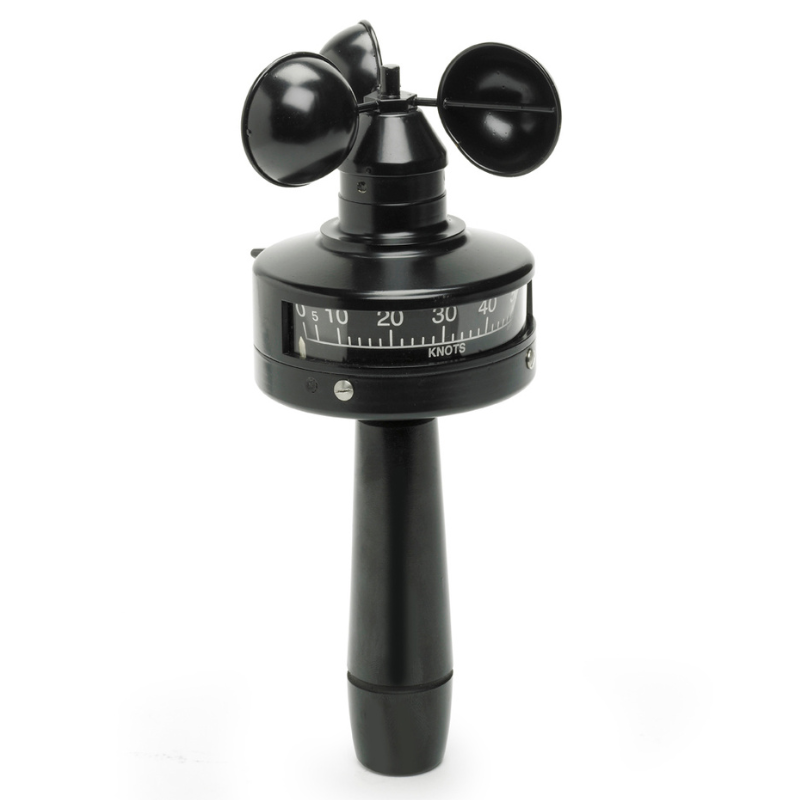
A wind anemometer is an instrument used to measure the speed and sometimes the direction of wind. If you have ever wondered how weather stations report wind speed so accurately, the answer lies in this device.
Why Measuring Wind Is Important
- Weather forecasting depends heavily on wind data
- Aviation safety relies on accurate wind measurements
- Wind energy projects need precise wind analysis
- Environmental monitoring uses wind patterns to track pollution
Without reliable wind data, decisions become guesses. And in fields like aviation or renewable energy, guesses are expensive.
The principle of operation
At a basic level, an anemometer measures how air moves. When wind flows across the device, it creates motion or changes in energy that can be measured.
Mechanical Measurement
Traditional anemometers use rotating parts. As wind pushes the cups or propellers, they spin. The faster they spin, the stronger the wind.
Electronic Measurement
Modern devices use sensors. These sensors detect changes in heat, sound, or pressure caused by airflow, then convert that into digital data.
Main Types of Wind Anemometers
Different applications require different types of anemometers. Each has its strengths.
Cup Anemometers
These are the most recognizable type. They have three or four cups attached to arms.
When wind blows, the cups rotate. The rotation speed is directly proportional to wind speed.
They are widely used in meteorological stations.
Vane Anemometers
Also called propeller anemometers, these combine a fan-like rotor with a tail.
They measure both wind speed and direction at the same time. This makes them useful for field measurements and HVAC applications.
Hot-Wire Anemometers
These devices use a heated wire.
As air flows over the wire, it cools it down. The amount of cooling tells you the wind speed. This method is extremely sensitive and is often used in laboratories.
Ultrasonic Anemometers
No moving parts. That is their biggest advantage.
They measure how fast sound waves travel between sensors. Wind affects the speed of sound, and this difference is used to calculate wind speed and direction.
They are highly accurate and ideal for research and harsh environments.
Laser Doppler Anemometers
These use laser beams to measure airflow velocity.
They are typically used in advanced research where precise, non-contact measurements are required.
Essential Components of an Anemometer
A typical Wind anemometer includes:
- Sensors or rotating elements
- Signal processing unit
- Data output system
- Mounting structure
Units Used in Wind Measurement
Wind speed can be expressed in several units:
- Meters per second (m/s)
- Kilometers per hour (km/h)
- Miles per hour (mph)
- Knots (used in aviation and maritime)
The choice depends on the industry.
Key Factors Influencing Measurement Accuracy
Getting accurate wind data is not as simple as placing a sensor outside.
Several factors can affect readings:
- Height above ground
- Nearby obstacles like buildings or trees
- Turbulence
- Sensor calibration
Even a perfectly designed anemometer can give poor data if installed incorrectly.
Where Are Wind Anemometers Used?
Meteorology
Weather stations rely on anemometers to track wind patterns. This data helps predict storms and climate behavior.
Aviation
Airports use anemometers to ensure safe takeoffs and landings. Pilots need precise wind information.
Environmental Monitoring
Wind affects how pollutants spread. Monitoring wind helps track air quality and environmental impact.
Renewable Energy
Wind turbines depend on accurate wind data. Anemometers help determine the best locations for wind farms.
Industrial Applications
industrial Anemometers are used in HVAC systems, laboratories, and industrial processes to monitor airflow.
For high-precision applications, advanced laboratory and environmental monitoring equipment is essential. Companies like MRC LTD provide a wide range of scientific instruments that support accurate airflow and environmental measurements in research and industry.
How to Select the Best Anemometer for Your Needs
Choosing the right device depends on your needs.
Consider:
- Required accuracy
- Measurement range
- Environmental conditions
- Whether you need wind direction
- Budget
For example, a basic cup anemometer works well for weather stations, while ultrasonic models are better for research.